
Rhythms & Resonance
A tactile crash course in acoustics, wave physics, and instrument design. Students investigate how sound actually moves through air and wood, then assemble a wooden resonator box and tune their very own 5-key kalimba, an instrument they get to keep and take home.

What students actually do.
Frequency & Wavelength Lab
Use a tuning fork and cup of water to visualize sound waves and measure their frequency.
Resonator Box Assembly
Sand, glue, and clamp the wooden resonator that will amplify the kalimba's tone.
5-Key Kalimba Build & Tune
Cut steel tines to length using a chromatic tuner, mount them, and dial in a pentatonic scale.
Compose a Two-Bar Riff
Notate an original rhythm on staff paper and perform it for the group.
Full materials list.
- Pre-cut hardwood resonator panels (top, bottom, 4 sides)
- Set of 5 spring-steel kalimba tines with bridge and cross-bar
- Wood glue, sandpaper (120 / 220 grit) and clamp
- Digital chromatic tuner
- Tuning fork (A-440) and waveform observation cup
- Staff paper booklet and pencil
- Facilitator guide with tuning charts
NGSS & CCSS aligned.
By the last session, every student can:
Kids meet the real scientists behind the work.
Dr. James E. West
American acoustician and co-inventor of the electret microphone found in most modern phones.
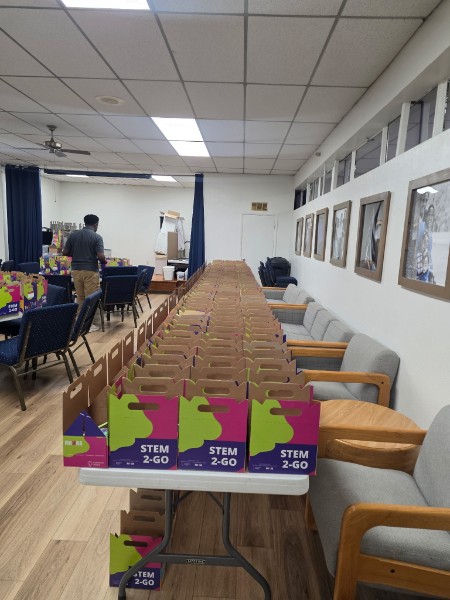
From our workshop to classrooms nationwide.


Ready to bring Rhythms & Resonance to your classroom?
Please allow several business days for your kits to be prepared for shipping — custom and made-to-order kits may require additional production time. District quotes and grant documentation are prepared within 1–2 business days.